


Immigration to New Zealand

Why New Zealand, and why now?
New Zealand ranked 2nd in the 2026 Global Peace Index and is the most peaceful country in the Asia-Pacific region. It is a safe, stable place to build a career and raise a family. A resident visa such as the Skilled Migrant Category (SMC) lets you live, work and study in New Zealand indefinitely, and after two years you may be able to apply for a Permanent Resident Visa. Here is what changed in 2026 and what it means for your path to residence.
What changed in 2026, and why it helps you
New Zealand qualifications are worth more points
A New Zealand bachelor’s degree earns 5 points (4 for an overseas bachelor’s). A New Zealand master’s degree earns 6 points if you studied 30+ weeks full-time and hold a bachelor’s degree.
A New Zealand master’s can reach the full 6 points on its own. A New Zealand bachelor’s needs only 1 year of skilled New Zealand work experience. SMC guide →
Less New Zealand work experience needed for extra points
2 years of skilled work experience in New Zealand earns 3 points, 1.5 years earns 2 points, and 1 year earns 1 point.
An overseas bachelor’s (4 points) plus 1.5 years of skilled New Zealand work reaches 6 points. SMC guide →
Two new pathways to residence (from 24 August 2026)
The Skilled Migrant Category now has three pathways: Points-based, Skilled Work Experience, and Trades and Technician.
If your skills come from experience rather than a degree, you now have a route that doesn’t depend on points. Skilled Work Experience needs no formal qualification. Trades and Technician needs a Level 4 or higher qualification plus experience in an eligible role. SMC guide →
More options for graduates (from 16 November 2026)
A new Short Term Graduate Work Visa gives eligible graduates up to 6 months of open work rights. Post Study Work Visa eligibility also extends to Graduate Diploma graduates who hold a bachelor’s degree, for up to 1 year.
More graduates get time to find a job with an accredited employer, the usual first step toward an Accredited Employer Work Visa and then residence. PSWV →
Do these changes apply to you?
Every situation is different. Tell us about your qualifications, work experience and plans, and we’ll explain which pathway fits you best.
Residence pathways
These employment-based visas lead directly to residence. All three require a job, or a job offer, with an accredited employer in New Zealand (an employer approved by Immigration New Zealand).
Skilled Migrant Category (SMC)
Suits you if you have a skilled job, plus a qualification, occupational registration, high pay or years of experience.
New Zealand’s main residence pathway for skilled migrants. You can qualify through the Points-based pathway (6 points from a qualification, registration or pay, plus New Zealand work experience), Skilled Work Experience, or Trades and Technician.
Green List
Suits you if your job is on Immigration New Zealand’s shortage list.
Tier 1 roles can apply for residence directly (Straight to Residence). Tier 2 roles apply after 24 months of work (Work to Residence). The list includes health, engineering, ICT, teaching and skilled trades roles, so check your role on Immigration New Zealand’s Green List tool to see its tier.
Care Workforce
Suits you if you work in aged care or disability support.
After 24 months of work in a care workforce role (within the 30 months before you apply), paid at least NZ$28.25 per hour, you can apply for residence.
Visas on the way to residence
These visas are not residence themselves. They are the usual steps toward it.
Student Visa (Study to residence)
Suits you if you plan to study, or are already studying, in New Zealand.
A New Zealand qualification earns more SMC points than an overseas one, and graduates can then work on a Post Study Work Visa. Your course choice affects how quickly you can reach residence. Study in NZ →
Accredited Employer Work Visa (AEWV)
Suits you if you have a job offer from an accredited employer.
Work in New Zealand for up to 5 years, depending on the role. Skilled work experience gained on this visa can count toward SMC points, and some roles lead to residence through Work to Residence pathways. AEWV →
Post Study Work Visa (PSWV)
Suits you if you are finishing, or have just finished, study in New Zealand.
Degree-level graduates can work for any employer for up to 3 years: 3 years for a master’s or doctorate studied for 30+ weeks, otherwise the length of your study. Your partner can apply for a work visa, and dependent children can study as domestic students. PSWV →
Partnership Visas
Suits you if your partner is a New Zealand citizen or resident.
These are assessed on whether your relationship is genuine and stable, not on skills. Evidence requirements are detailed, so preparing carefully from the start matters. Ask an adviser →
SOL Licensed Immigration Advisers
In New Zealand, providing immigration advice or handling visa applications requires a Licensed Immigration Adviser (with limited exemptions, such as New Zealand lawyers). Licensing is managed by the Immigration Advisers Authority (IAA), and unlicensed immigration advice is prohibited by law. Before you consult anyone, confirm that your adviser is licensed. You can search the IAA register by name or licence number.
In-house immigration advisers, not outsourced
SOL has 9 licensed immigration advisers and does not outsource immigration advice. Licensed advisers are based in both New Zealand and Australia, so visa refusals, changes of conditions and residence strategy are handled immediately, with no hand-off to a third party. Because advisers are involved from the study consultation stage, you can check from day one whether a course can lead to residence.

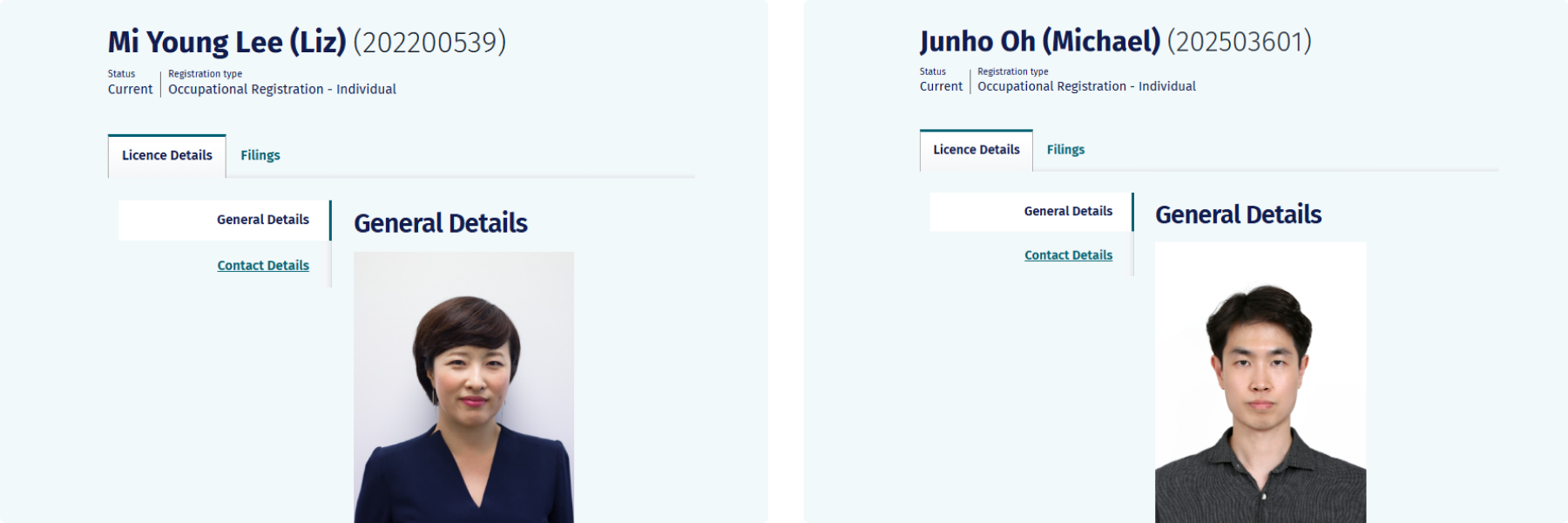
Miyoung Lee, Licensed Immigration Adviser
Based in Auckland
Licence no. 202200539
Specialties: SMC, Green List, post-study migration

Junho Oh, Licensed Immigration Adviser
Based in Seoul
Licence no. 202503601
Specialties: SMC, Green List, post-study migration
Frequently asked questions
Is there an age limit?
SMC applicants must be 55 or younger when they apply. Study and work experience add time, so it helps to plan your full timeline before you start. Other pathways have different requirements.
Do I need to prove my English?
For the SMC, yes. You can meet the requirement through citizenship, where you studied and the qualifications you gained, or an approved English test. Test results must be no more than 2 years old, or up to 5 years if you hold an eligible occupational registration.
Can I apply without a job offer?
The SMC, Green List and Care Workforce pathways all require a job or job offer with an accredited New Zealand employer. Routes that don’t require a job, such as partnership-based visas, work differently.
How long does it take to get residence?
It depends on your starting point. A New Zealand master’s graduate with a bachelor’s can reach 6 points straight away, though you still need a skilled job with an accredited employer. Green List Tier 1 roles can apply for residence directly, and Tier 2 roles apply after 24 months of work. After holding an SMC Resident Visa for 2 years, you can apply for a Permanent Resident Visa. We can estimate your timeline in a consultation.
Can my family come with me?
An SMC Resident Visa lets you include your partner and dependent children aged 24 or younger. If you study first, your partner’s work rights and your children’s schooling depend on your qualification. Learn about free education for children →
