New Zealand University
AUT
Auckland University of Technology






AUT
Auckland University of Technology
About the school
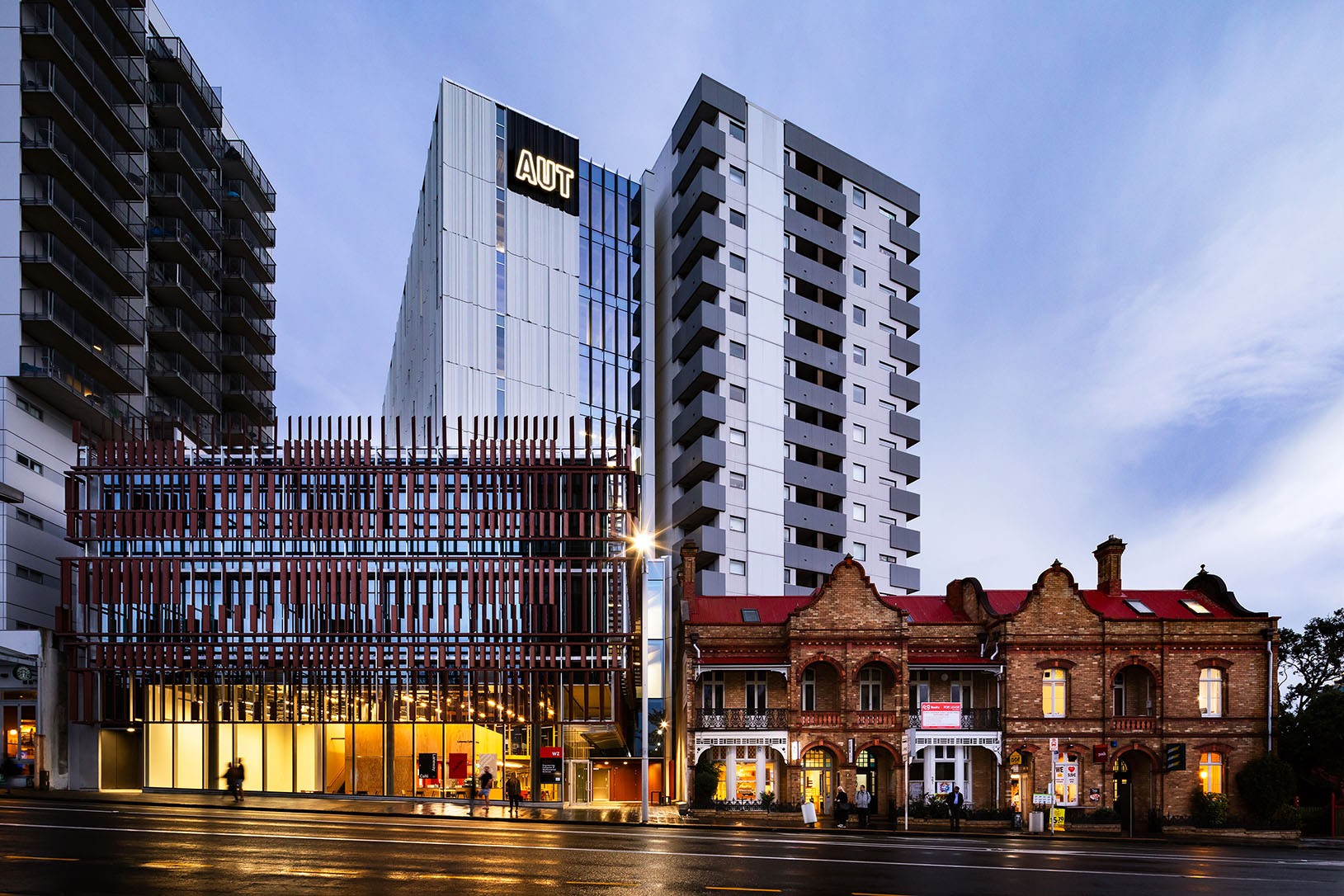
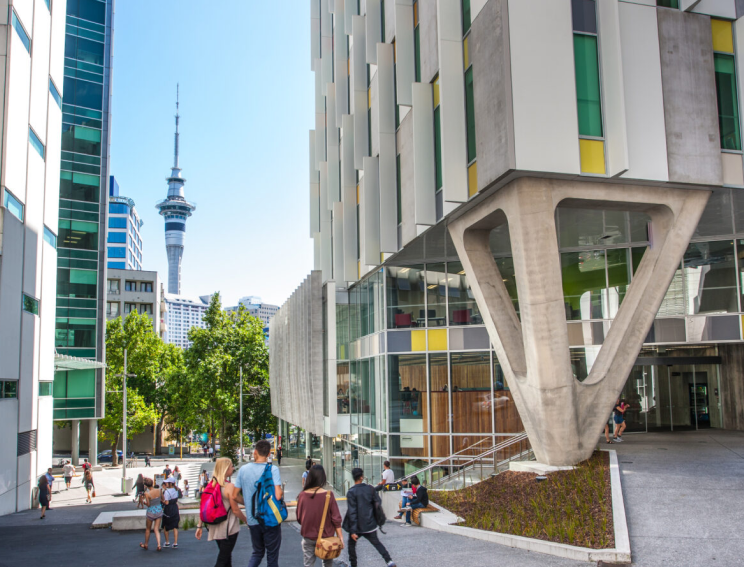
Auckland University of Technology (AUT) began in 1895 as a specialist technical institute and became New Zealand’s eighth fully accredited university in 2000. Located in Auckland, AUT operates four modern campuses: the City Campus, North Campus, South Campus in Manukau, and Millennium Campus. Depending on your chosen major and courses, you may attend classes at different AUT campuses, with convenient shuttle services connecting each location.
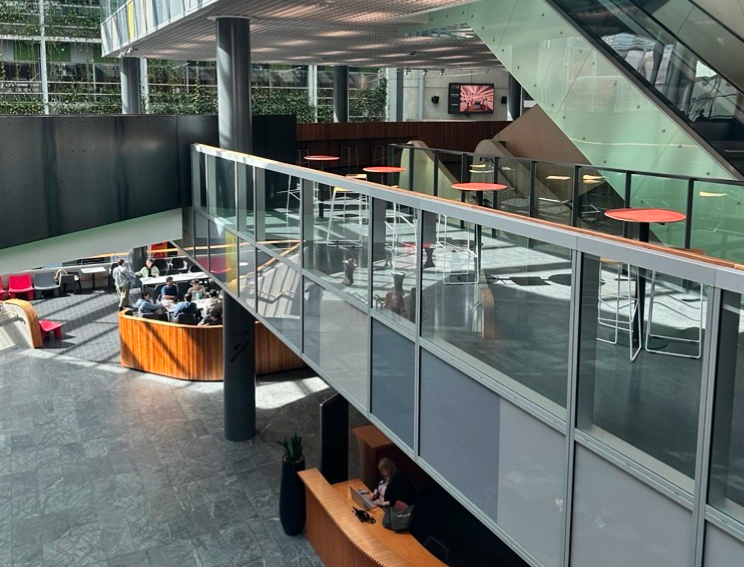
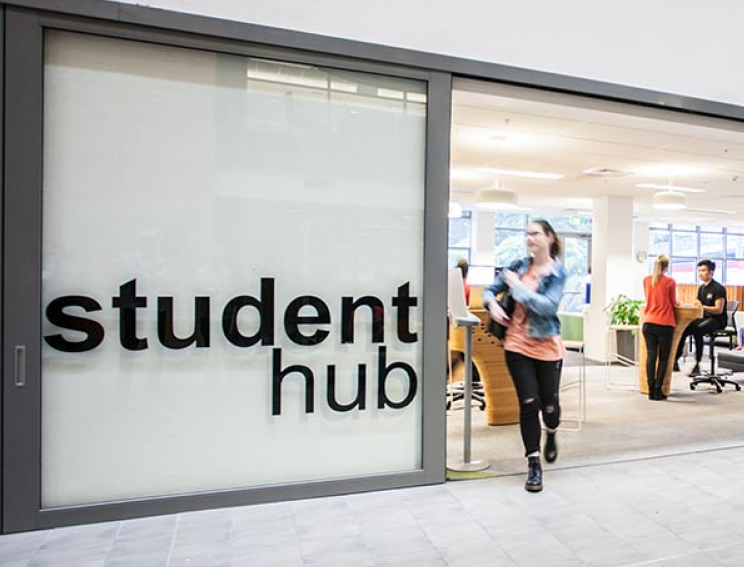
AUT City Campus is home to the Business and Law, and Culture and Society faculties. It also features libraries, bookstores, fitness centres, and dedicated support services for international students. South Campus in Manukau, approximately 30 minutes from central Auckland, offers programs in business, information technology, education, and health. North Campus, around 20 minutes from the city centre, specialises in health and education courses.
The Millennium Campus in North Auckland provides advanced sports science facilities, including swimming pools, sports laboratories, and specialised training equipment.
AUT offers more than 250 study programs, including certificates, bachelor’s degrees, master’s degrees, and doctoral qualifications. Popular study areas include Business and Law, Culture and Society, Design and Creative Technologies, and Health and Environmental Sciences.
Why choose AUT
-
AUT began as a technical institute before becoming a fully accredited New Zealand university. It offers practical, industry-focused programs that are less widely available at other universities, including culinary arts, baking, and applied diplomas.
-
Flexible AUT study pathways enable students to progress from certificate courses to bachelor’s degrees.
-
Distinctive practical majors include Occupational Therapy, Podiatry, and other applied disciplines.
-
Experienced faculty members maintain strong industry and business connections, providing relevant, work-ready knowledge.
-
AUT’s high graduate employment rate reflects its practical, career-focused teaching approach.
Programmes
Business and Law
- Bachelor of Business
- Bachelor of Laws
Culture and Society
- Bachelor of Education
- Bachelor of Arts
- Bachelor of International Hospitality Management
- Bachelor of International Tourism Management
- Bachelor of Arts
Design and Creative Technologies
- Bachelor of Communication Studies
- Bachelor of International Tourism Management
- Bachelor of Visual arts
- Bachelor of Design
- Bachelor of Creative Technologies
- Bachelor of Engineering
- Bachelor of Engineering Technology
Health and Environmental Studies
- Bachelor of Computer and Information Sciences
- Bachelor of Mathematical Sciences
- Bachelor of Science
- Bachelor of Health Science
- Bachelor of Sport and Recreation
English requirements
Bachelor’s Degree
IELTS overall 6.0 (minimum 5.5 in each band)
Diploma
IELTS 5.5 (minimum 5.0 in each band) or IELTS 6.0 (minimum 5.5 in each band)
- For more information, please refer to the link.
- Some AUT programmes may also require a portfolio or personal statement, while admission criteria and supporting document requirements can change each year.